

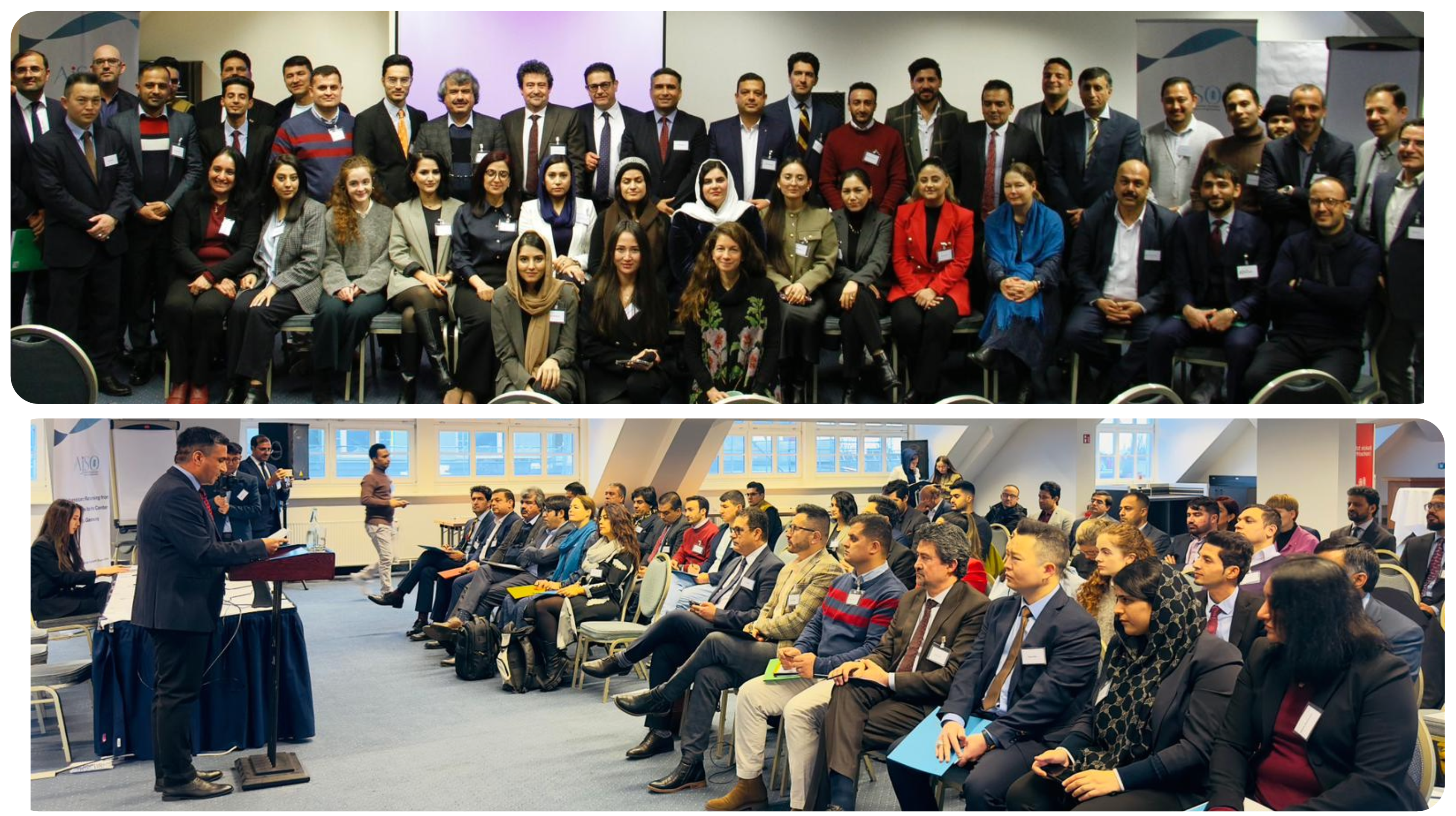
The Afghanistan Journalists Support Organization (AJSO) held a symposium titled “Afghanistan: Returning from the Margins to the Center — A Media Perspective” in Berlin, Germany, on December 4, 2024. More than 70 participants, including representatives of Afghan exile media, international media assistance organizations, media experts, and media freelancers, attended the event.
They discussed ways and challenges to bring Afghanistan to the global agenda. They argued and unanimously agreed that continuous advocacy and global media coverage of the country could help bring Afghanistan to the international community’s attention agenda. The event featured keynote speech, panel discussions, and workshops designed to foster practical solutions and sustained engagement in addressing the country’s ongoing issues.
The symposium began with a welcoming speech by Mr. Hamid Obaidi, the Chairperson of AJSO, who underscored the urgency of advocating for Afghanistan on the international stage. Mr. Obaidi also thanked the sponsoring organization, the Friedrich Naumann Foundation (FNF), for its constant support of Afghan media during this critical time. Following the opening remarks, Nasir Ahmad Fayeq, Permanent Representative of Afghanistan to the United Nations, delivered a keynote titled “Resilience and Advocacy Efforts to Keep Afghanistan Alive on the Global Agenda.”
Fayeq highlighted the importance of resilience in the face of geopolitical shifts and emphasized the role of advocacy in ensuring that Afghanistan’s plight remains visible to global policymakers. He discussed how responsible action by the international community can be a lifeline for the country’s efforts, mainly through media representation and advocacy. Later, Miss Freshta Hemmati, CEO of AJSO, took the podium and provided a detailed presentation on the organization’s history and ongoing efforts, outlining key milestones in its journey.
The presentation emphasized AJSO’s role in supporting Afghan journalists both within the country and in exile, illustrating the organization’s commitment to preserving press freedom despite the restrictive environment.
The event proceeded with the first panel discussion, titled “The Role of Media in Conflict Zones & Reporting on Afghanistan,” moderated by Hafizullah Marouf. It featured prominent journalists, including Parwiz Kawa (Hasht-e-Subh Daily), Harun Najafizada (Afghanistan International), and Dr. Anja Wollenberg (MiCT).
The panel explored the complexities of reporting from conflict zones and the challenges posed by restricted access to accurate information. Panelists discussed the media’s critical role in ensuring transparency and accountability in conflict narratives, highlighting the need for secure channels to protect journalists on the ground.
The second panel, “Global Media’s Role in Covering Afghanistan’s Crisis,” moderated by Mursal Wardak (AJSO), focused on how international media can better cover the Afghan crisis. Panelists, including Astrid Coyne-Jensen (International Media Support), Hazrat Bahar (AJSO & Leipzig University), Zahra Joya (Rukhshana Media), and MJ Daoud (The What If), debated the challenges faced by exiled Afghan journalists and the importance of accurate, nuanced reporting to counter misinformation and propaganda. The discussion emphasized the power of global media in shaping public perception and policy regarding Afghanistan.
The last and essential part of the symposium was allocated for a workshop to delve deeper into recommendations for developing an actionable plan for bringing Afghanistan to the international community’s agenda. Participants were divided into four groups, each tasked with developing strategies for overcoming specific challenges. The topics included:
• Accessing and Reporting Information in Afghanistan: Practical solutions have been proposed for gathering and disseminating information in a highly restricted media environment.
• Support Mechanisms for Afghan Exile and International Media: Discussions focused on establishing robust support networks for Afghan exiled media and journalists to ensure they remain connected, coordinated, and active in their work.
• Applying Symposium Recommendations: Participants formulated strategies for translating the symposium’s insights into concrete actions.
• Drafting Codes of Ethics for Afghan Exiled Media: AJSO was tasked with developing ethical guidelines tailored to the unique challenges faced by Afghan media and journalists working abroad.
The participants emphasized the critical need for continued global attention to Afghanistan’s crisis, the importance of supporting independent Afghan media outlets, and the necessity of building resilient advocacy networks. In summary, the symposium was vital in reaffirming global solidarity with Afghanistan. It provided a platform for meaningful dialogue, practical solutions, and a renewed commitment to ensuring that Afghanistan remains a priority on the international agenda.
A detailed report on the symposium will follow